ScreenGawk
The Elizabeth Holmes Documentary and How It Differs From The Dropout
Prefer ScreenGawk on GoogleSee more of our stories in your results
Two screen projects share a subject and almost nothing else about how they are made. The Inventor: Out for Blood in Silicon Valley is Alex Gibney's HBO documentary examining Elizabeth Holmes and Theranos. The Dropout is Hulu's scripted limited series, with Amanda Seyfried cast as Holmes.
The short answer for a viewer choosing between them: the film is nonfiction assembled by an editor, and the series is drama carried by actors. That difference decides what each one can show you, and it should decide which one you press play on first.
The HBO film: The Inventor
CNN's announcement identifies The Inventor: Out for Blood in Silicon Valley as Alex Gibney's HBO documentary, and it describes the film as an examination of Elizabeth Holmes and Theranos. The announcement concerns CNN's special presentation of the film in 2023. So the film carries HBO's name, has Gibney as its credited filmmaker, and was scheduled as a CNN special that year.
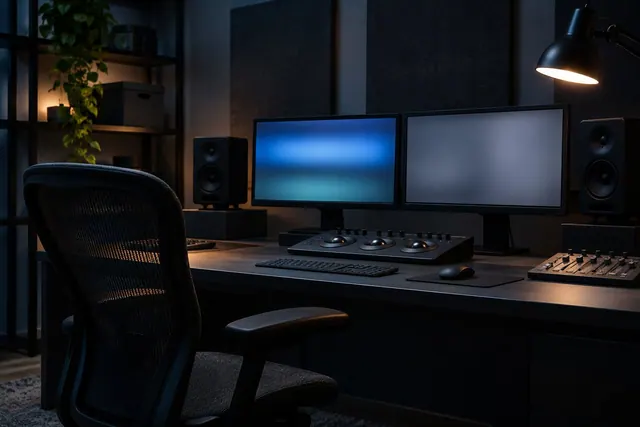
The title gives you some idea of the territory, and the director’s name tells you whose work to look out for. A documentary editor can put two separate moments together and invite you to compare them. Watch when a voice carries across a cut, and what the next image adds to what you just heard.
The Hulu series: The Dropout
Hulu's press page describes The Dropout as a scripted limited series. It stars Amanda Seyfried as Elizabeth Holmes and Naveen Andrews as Sunny Balwani, and it credits Elizabeth Meriwether as showrunner and executive producer. Those credits are the core of Hulu's framing, and they point to a different kind of authorship than the documentary has.
A limited series tells a story across a set run of episodes. Each episode can move you from one part of a character’s life to another. Notice which point in time the series chooses to open with, and what it leaves for the next episode.
What editing does in a documentary
In a nonfiction film, the raw material already exists. There is footage, recorded audio, documents and recollection, and the filmmaker's main tool is selection. The editor decides which clip opens a sequence, which line of speech gets trimmed, and what image sits underneath a voice. None of that requires inventing anything, but all of it shapes meaning.
A cut is the visible seam where one shot ends and another begins, and it is the easiest craft element to notice once you know to look. When a documentary cuts from an interview to a document, the viewer is invited to treat the second as proof of the first. When it cuts from a confident statement to a contradicting record, the viewer is invited to doubt. The same footage in a different order would produce a different feeling.
That power has a cost. An examination built from edited pieces can feel more authoritative than it has earned, because the seams are smooth and the tone is certain. Formal polish can make a difficult subject feel settled. A viewer is better served by treating a documentary's arrangement as an argument made by its filmmaker, and by asking what a different cut might have emphasized.
What performance does in a scripted series
A scripted series starts from the opposite end. Writers build scenes, a director stages them, and actors supply faces, voices and timing. When Amanda Seyfried plays Elizabeth Holmes, the viewer is watching an interpretation, a performer's decisions about posture, pace and expression layered over a script. The credit says who is playing whom. It does not say the performance is a record.
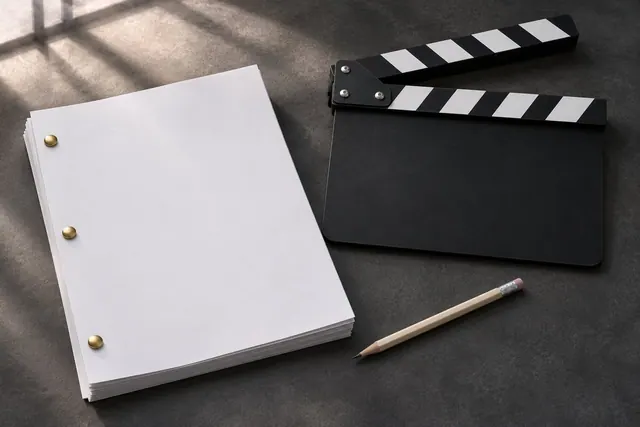
Performance changes how a scene feels in a way a documentary does not. A close-up on an actor lets the audience read thought, and a long take on two actors lets a conversation breathe. Naveen Andrews is credited as Sunny Balwani, so any scene between the two characters is built by two performers working inside a script, not recovered from material that already existed.
The limit runs the other way. A dramatization compresses time and stages conversations, because a script needs scenes that move. That is a normal feature of the form, and it means a viewer should treat the series as a told story about its subject, with its credited creative leads and cast as its authors.
The differences at a glance
Set side by side, the differences come down to four visible points. On authorship, Gibney is the credited filmmaker of the HBO documentary, while Hulu names Elizabeth Meriwether as showrunner and executive producer of its series. On format, one is a film and the other is a limited series. On the subject, the film examines Holmes and Theranos, while the series casts Seyfried as Holmes and Andrews as Balwani. On method, the film works through selection and arrangement, and the series works through performance and staging. The shared subject is where the overlap ends.
Which to watch first
Choose the documentary first if you want the subject laid out as a case, with the filmmaker's selection of material doing the explaining. It is the more direct route to the question of what Theranos was and who Holmes was, as Gibney's film frames them. It is also a single title, where the series is a run of episodes.
Choose the series first if you respond better to character and scene than to the arrangement of evidence. Seyfried's Holmes and Andrews's Balwani give you faces to follow. Watch it knowing that you are seeing a dramatized interpretation, and let that shape how much weight you put on any single scene.
A fair objection is that the nonfiction film should always come first because it is nonfiction. That does not follow. Selection and order are choices, so the film is an argument as much as a record, and the series is an interpretation with named authors. Neither form is a neutral window. The film is a poor first pick if you want performance and narrative momentum, and the series is a poor first pick if you want the material presented without actors standing in for people.
Start with the form that matches what you want from the screen. The HBO film, credited to Alex Gibney and examining Holmes and Theranos, rewards attention to selection and cut. The Hulu series, led by Seyfried, Andrews and showrunner Elizabeth Meriwether, rewards attention to performance and staging. Whichever you pick first, the question to carry into the second is the same one: what is this scene doing to me, and which craft choice is doing it?