ScreenGawk
What Stanley Tucci Does With Food in Big Night and Searching for Italy

In Big Night, Stanley Tucci plays one of two brothers hoping a single dinner can save their restaurant. In the first season of Searching for Italy, he travels to Sicily in search of a baked dish that also appears in the movie. If you watch the two together, you can follow one dish from a fictional dinner to the part of Italy where Tucci went looking for another example.
In Big Night, food is the stakes. The brothers plan a special dinner to revive the restaurant, so every dish carries a business risk and a family one. In Searching for Italy, food is the subject. The series treats a dish as a way into where it comes from and what that place has been through. One is a story about a meal. The other is a way of looking at meals.
Pick Big Night when you want a feature with an ending. Pick an episode of Searching for Italy when you want one destination and a host to show you around. You can start with either. The pair I would make from the first season comes from the connection between the dinner and the dish Tucci went looking for in Sicily.
Big Night: food as the plot
Paramount's page for Big Night gives the setup: two brothers, a restaurant in trouble and one special dinner meant to turn things around. Tony Shalhoub plays the chef, Primo. Tucci plays Secondo. I like the premise because you can understand the pressure before anybody serves a course. You know what the brothers hope the evening will do for them, and you can watch with that hope in mind.
Tucci co-wrote and co-directed the 1996 film as well as playing Secondo. The American Film Institute gives it a running time of 108 minutes. That is the commitment to plan for when you pick the film. It gives you one restaurant and one pair of brothers to think about, which is a different kind of attention from following a host through several places.
The dish to watch for is timballo, a baked mold of pasta or rice. In CNN’s Sicily segment, Tucci explained that his family had its own version and called it the centerpiece of Big Night. That gives you a useful question to ask about the film. Why might a dish that takes up so much room on the table also take up so much room in a story about keeping a restaurant open?

Searching for Italy: food as a map
CNN's announcement described six destinations for the first season, including Naples and the Amalfi Coast, Rome, Milan and Sicily. Pizza belongs to the first of those stops, carbonara to the Rome episode and risotto to Milan. The names let you choose a place by a dish you recognize. See whether the place makes you think differently about a dish you already know.
In the segment CNN transcribes from the Sicily finale, Tucci says his family has its own version of timballo and calls the dish the centerpiece of Big Night. If you have seen the film, keep that dinner in mind. If you have not, try using that detail as a reason to see the film next.
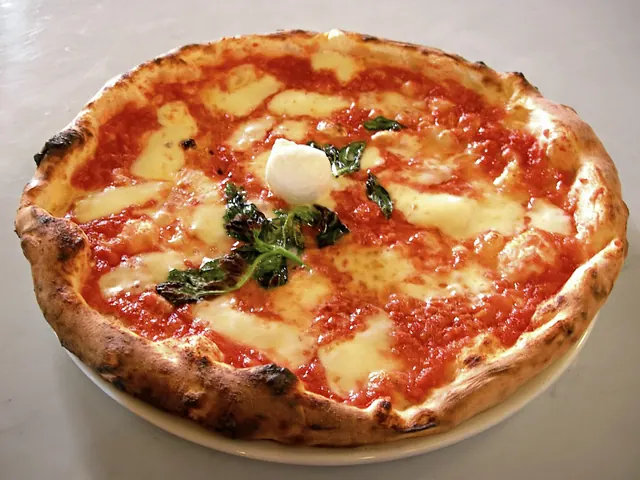
If the movie is new to you and you would rather begin with the series, try the Naples and Amalfi Coast episode for pizza. The photo here shows a pizza from Naples; it is not one from the show. The comparison I would make is what each format gives you a reason to notice. In a movie about a dinner, I want to know what is at stake for the hosts. In a travel episode, I want to know why that dish is worth going somewhere for.
Follow the same dish across both screens
Here is one way to try both. After Big Night, see which detail of the centerpiece you remember. It might be the shape or the moment you realized what the dinner meant to the brothers. When you get to the Sicily episode, listen for what Tucci remembers about his family’s version. Seeing what each format makes you remember is more interesting than trying to choose a better-looking plate.
Tucci gives the two projects a point of contact. He was one of the people making the film, and he is the person following the dish in Sicily. So you get to see him take an idea in two directions. As a viewer, you can bring a question from one to the other: what changes when a dish moves from somebody’s family memory into a story about somebody else?
Try one of the two with someone who usually pays little attention to the food in a movie. Ask what they noticed first. In the film you can talk about what they hoped the dinner would do for the brothers. In the series you can compare which place or dish you would like to know more about. That conversation is one reason to try the pairing.
I would skip Big Night on a night when I wanted to see a particular place in Italy rather than spend 108 minutes on a story about a restaurant. I would skip Searching for Italy when I wanted the payoff of one plot carried from beginning to end. A show that changes places from one episode to the next asks for a different kind of interest.
What to put on first
If you have company, ask what they want to talk about afterward. The brothers give you a shared story to compare reactions to. One episode gives everybody a place and a dish they can look up on their own. Both make a good choice for a group, as long as you choose the one that fits the kind of evening the group came for.
The film and the series also leave room to change your mind halfway through the pairing. After you finish the restaurant story, you can pick a dish from the series because it sounds good to you. Sicily gives you the direct link with the film, but it does not have to be the only reason to keep watching.
After the pair, Rome or Milan makes a useful third stop if you want to stay with the series. You will have the same host and a different dish to follow: carbonara in Rome or risotto in Milan. Pick the food you are more curious about.
For a first pass I would spend one night with Primo and Secondo, then go to Sicily with Tucci. The restaurant gives you a reason to care whether a dinner succeeds. The episode gives you a chance to hear Tucci talk about his family’s version of the dish. That is enough of a connection to make the second night feel like a continuation without making either title homework.