ScreenGawk
Edward VIII and Wallis Simpson: What the 1936 Abdication Changed
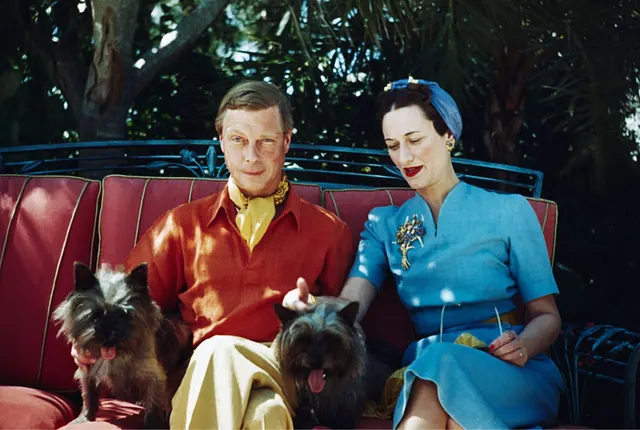
Edward VIII's decision to marry Wallis Simpson ended his reign in December 1936. His younger brother became George VI, bringing a different branch of the family directly into the succession. Edward and Wallis married in France the following year.
Their story is often remembered through the marriage. The surviving records also show the government confronting a constitutional problem, a formal transfer of the Crown and a former king whose later life included much more than retirement with his wife.
A relationship became a public question
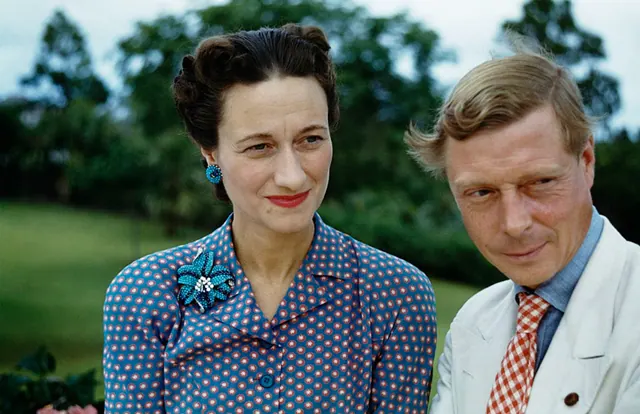
Edward's relationship with Wallis developed while he was Prince of Wales. She was an American woman who was married when they met. By 1936, his determination to marry her had brought his private life into discussions about the monarchy's future. The Royal Household's account records concern in the Cabinet, opposition parties and the Dominions. The disagreement involved the people and institutions around the Crown as well as the couple themselves.
A king who was never crowned
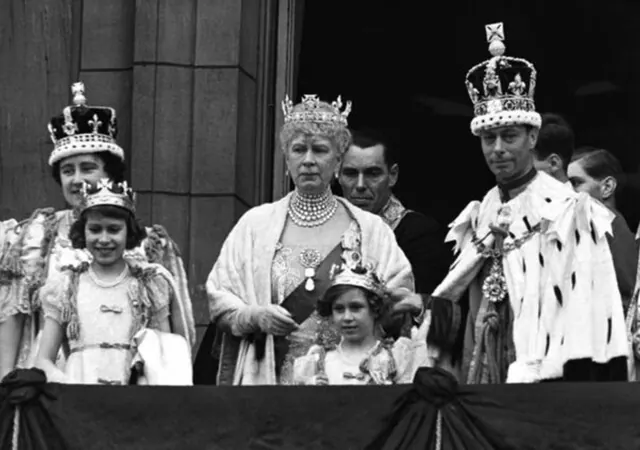
Edward succeeded his father, George V, in January 1936. He was already king during the dispute about his proposed marriage; he wasn't waiting to become king after a wedding. He never had a coronation. Plans for his reign were already being made, however. The Royal Mint records that production of his British coinage was due to begin in January 1937. Abdication stopped those plans before the coins entered circulation.
Why the proposed marriage caused a crisis
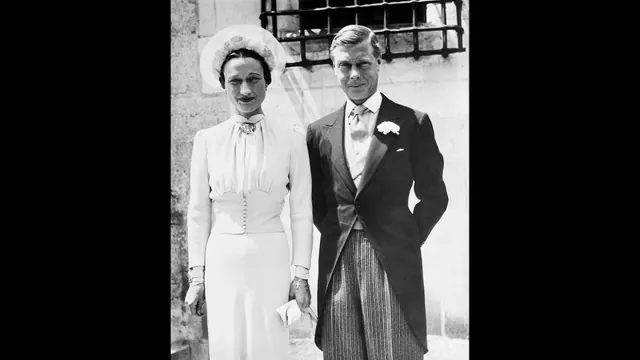
Wallis's divorce and Edward's intention to marry her created a problem for a monarch who was also Supreme Governor of the Church of England. His advisers opposed the marriage. This was a specific crisis in 1936, rather than a useful rulebook for every royal marriage before or since. It also shouldn't be reduced to the suggestion that Edward merely needed permission from a relative. The government's position was central to what happened next.
The government set out its position
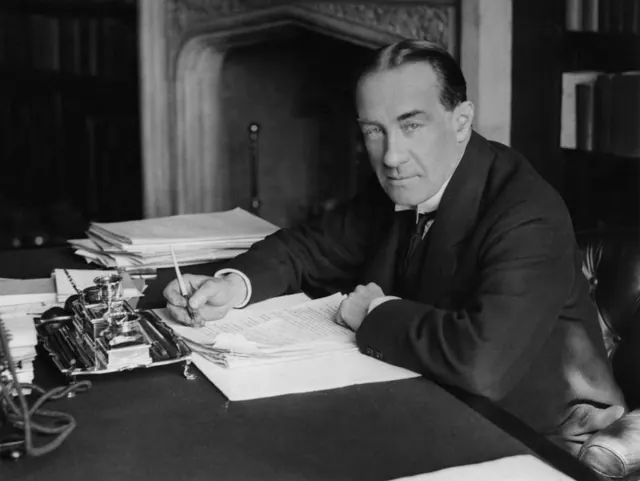
The parliamentary record preserves correspondence between Edward and Prime Minister Stanley Baldwin. In the Cabinet's account, ministers were unwilling to help him arrange the proposed marriage. Edward's response acknowledged that position and stated his decision to renounce the throne. Those documents record the positions taken in the crisis. They don't establish that every person in Britain shared the same view of Edward or Wallis, whatever later retellings might suggest.
What Edward signed on December 10
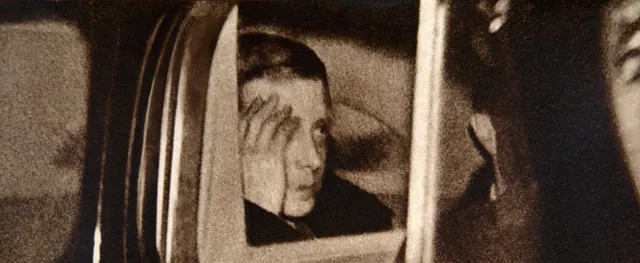
His written declaration renounced the throne for himself and his descendants. Hansard records that his three brothers, the Dukes of York, Gloucester and Kent, witnessed the instrument. Edward described his decision as final and asked for it to take effect promptly. He also identified the Duke of York as his successor. The personal explanation and the arrangements for succession appear together in the message read to Parliament that day.
The legal change and the broadcast
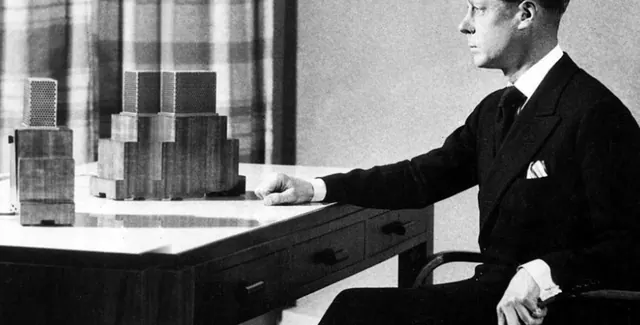
The instrument received legal effect on December 11 through His Majesty's Declaration of Abdication Act. Edward's brother then succeeded as George VI. That evening, Edward made the abdication broadcast remembered alongside the written declaration. The BBC dates it to December 11 and records John Reith introducing him from Windsor Castle. The broadcast told listeners about his departure; the transfer of the Crown had already been dealt with through the formal process.
A different branch of the family
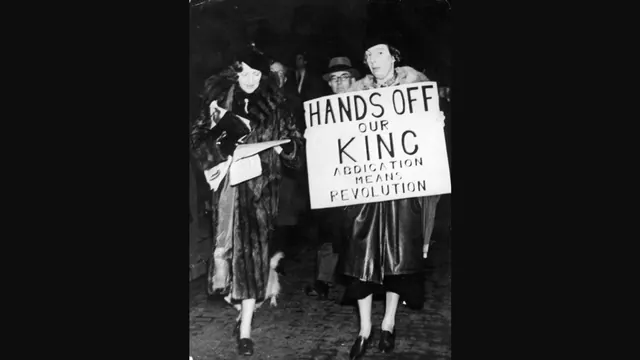
George VI's accession placed his daughter, Princess Elizabeth, next in line. She became Elizabeth II after her father's death in 1952. Edward's departure therefore changed much more than his own title or where he would live. It altered the order of succession. The archive also contains photographs of people supporting him during the crisis. A visible demonstration records those participants' position, rather than giving a measure of opinion across the country.
Marriage and the 1937 visit to Hitler
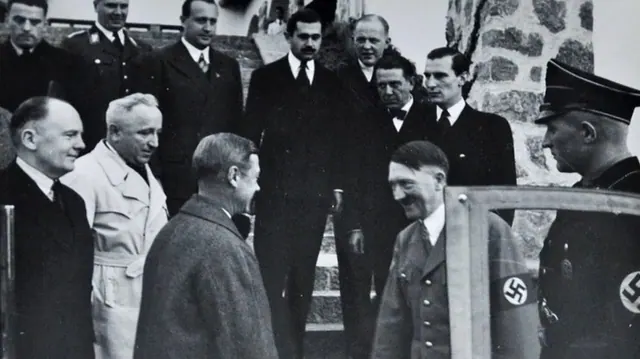
Edward became Duke of Windsor and married Wallis in France in 1937. Later that year, they visited Adolf Hitler. A contemporary press photograph preserved by Berlin's Akademie der Künste records their meeting at Berchtesgaden on October 22. That meeting belongs in the account of their life after abdication. The photograph documents the encounter; it doesn't, by itself, establish a claim about formal Nazi Party membership. Such a claim needs its own evidence.
Living abroad did not end every connection
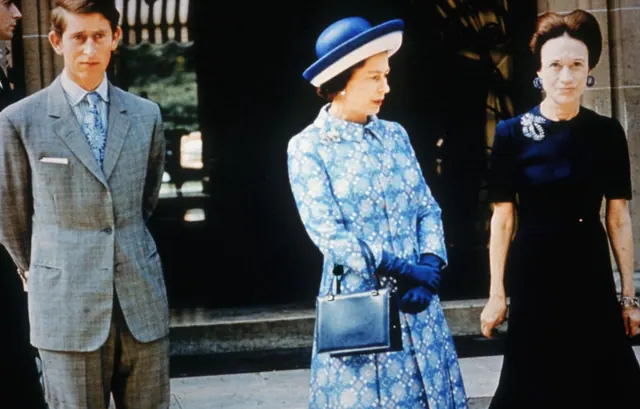
The couple's life abroad wasn't an uninterrupted withdrawal from public affairs. During the Second World War, Edward left France and was appointed Governor of the Bahamas, serving until 1945. Nor were all later family contacts severed. Elizabeth II visited him in Paris shortly before his death in 1972. That documented visit contradicts a simple account in which the Queen permanently excluded him from every connection with the family.
The return to Windsor in 1972
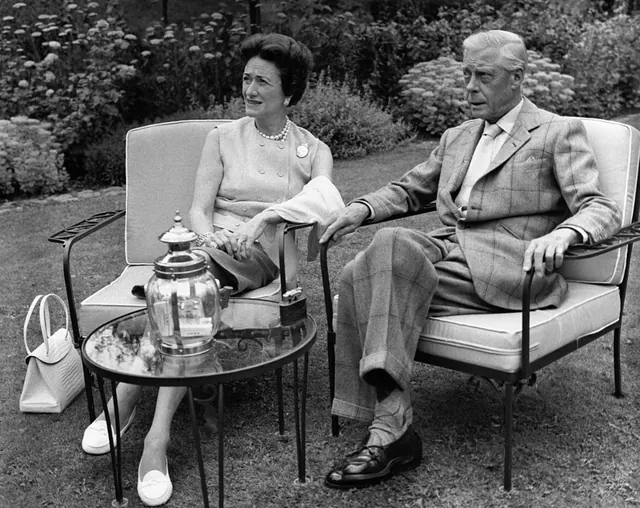
Edward died in Paris on May 28, 1972. His body was brought back to Britain, and his funeral took place at St George's Chapel on June 5. Elizabeth II and other members of the family attended. He was then buried at Frogmore. These were concrete arrangements for a former sovereign and a relative. They can't tell us every private feeling behind them, but they show why total estrangement is an incomplete description.
Wallis's later return to Windsor
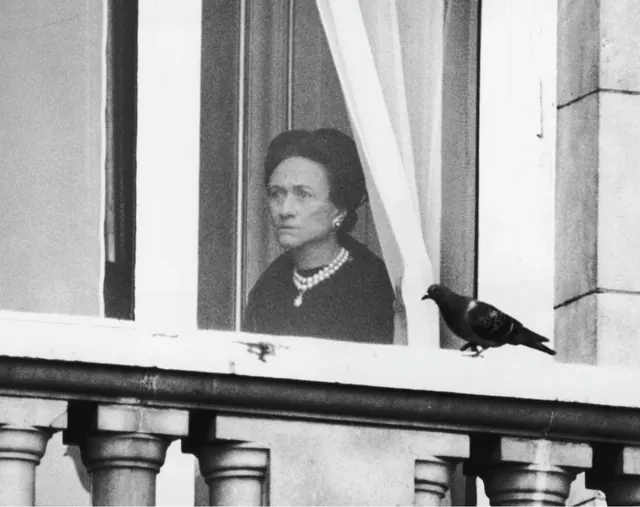
Wallis outlived Edward and died in Paris in 1986. Her remains were brought back to England for a funeral at St George's Chapel, attended by Elizabeth II and the Prince of Wales. She was buried beside Edward at Frogmore. Her position had always differed from her husband's: although she became Duchess of Windsor on marriage, she was never granted the prefix Royal Highness. The marriage gave them a shared name, while their formal royal status remained different.