ScreenGawk
Harry Potter's Scar in the Books and on the Hogwarts Express
Prefer ScreenGawk on GoogleSee more of our stories in your results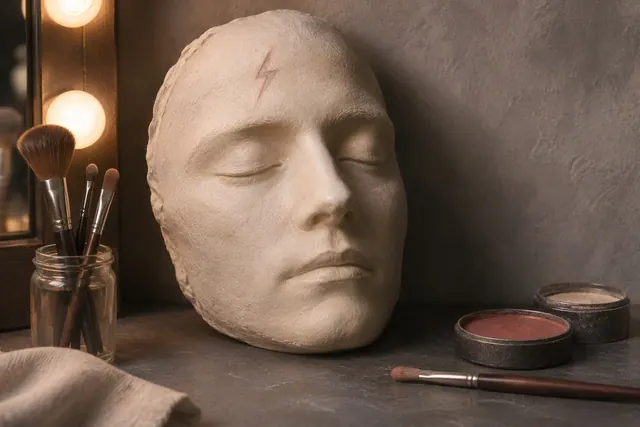
The first Harry Potter film puts the lightning scar off center on Daniel Radcliffe's forehead. J.K. Rowling gave that direction to Christopher Columbus, leaving readers a detail to look for on the Hogwarts Express. When Ron asks Harry about the scar, the mark becomes part of the way the two boys meet.
Where the film put the mark
The official article comparing book descriptions with film appearances says the books leave the exact forehead placement open. It describes Rowling telling Christopher Columbus to put the scar off center. Columbus directed Harry Potter and the Sorcerer's Stone, the first film. That's where Daniel Radcliffe wore the makeup for his first meeting with Ron Weasley.
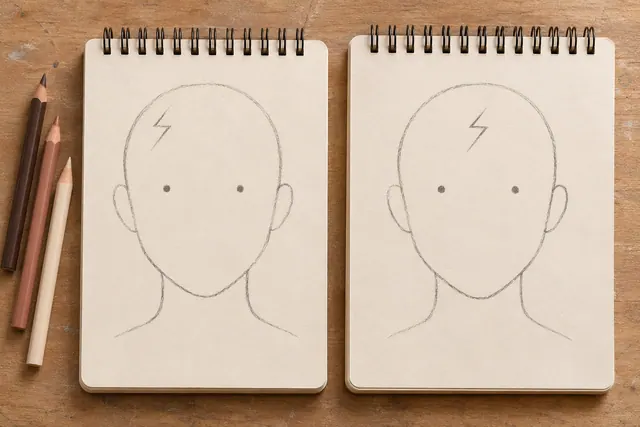
The official comparison of the book and film points out another difference in Radcliffe's face. The books give Harry green eyes. Radcliffe has blue eyes and could not wear green contact lenses because he was allergic to them. The scar gives you a different example of adapting a written description. The book leaves the placement open, and Rowling gave the film a position it could use.
The official photograph from the Hogwarts Express scene shows a smiling Harry with his hand on his hair. Ron has asked to see the mark. In the still, Harry's raised sleeve and hand take up the left of the image. The window is on the right. His forehead, glasses and smile sit in the space between.
The mark sits above and to one side of the line between Harry's eyes. In that picture, the line draws my eye down toward the rest of his face. A huge lightning bolt straight down the middle might pull my attention off the expression. Here I see both the expression and the mark.
The page that reproduces the photograph is about fame. I read the picture as a small version of what that can be like. Ron asks to see the scar, and Harry ends up holding his hair back as he turns toward Ron. In the first book too, the scar is a way for people to recognize Harry.
What the studio still shows
I read Harry's smile as the warmth of an introduction. The studio still shows the thin scar in view, above the glasses and below the hand at his hairline. That is enough to see where the makeup went. A production still cannot establish the finished film's cut, shot order or timing.
Major spoilers follow for the books and films, including the last Harry Potter story.
The first description in the book
The book describes the shape when Harry is still a baby. At the Dursleys' doorstep, Dumbledore and McGonagall look down at a sleeping baby. They see a lightning-shaped cut beneath a tuft of black hair on his forehead.
The cause: a failed attack
The mark comes from the night Voldemort tried to kill Harry. The official franchise account of Voldemort's interest in the Sorcerer's Stone explains that Lily's sacrifice protected her son. The attack backfired, leaving Harry alive with the scar. A boy who grew up with the Dursleys now had a trace of a night he was too young to remember.
In the first book, Harry liked the scar before he knew what caused it. Aunt Petunia told him it came from the car crash she said killed his parents. Hagrid gives him a different account, one that explains who was there and why. For Harry the meaning of an old mark changes right there, before it ever starts to hurt.
The pain, dreams and visions in the books
The official feature that follows the scar through the books describes it as dormant when Harry is growing up with the Dursleys. At Hogwarts the mark starts to hurt.
The franchise feature says Harry took the pain as a warning in his first year, when it led up to a meeting with Voldemort. He had lived with the mark since he was a baby. Now it gives him a feeling he has to pay attention to.
The Wizarding World account of Voldemort's Horcruxes explains that part of his soul attached itself to Harry when the attack failed. Harry became an unintended vessel, and the connection gave him access to some of Voldemort's thoughts and abilities. The feature about the scar describes the later pains, dreams and visions alongside details about that connection.
The feature also describes another time the scar brings an unwanted introduction. In Prisoner of Azkaban, Harry tries to keep Stan Shunpike from knowing who he is on the Knight Bus. Stan can see the scar once Fudge is there. The franchise feature also recalls Harry turning down Colin in the same discussion. That step away from the attention is another turn for a mark Harry had liked when he was young. Harry's reluctance fits a boy who has discovered that a stranger can turn his forehead into the first thing to talk about.
At the start of Goblet of Fire Harry feels the pain at Privet Drive with Voldemort nowhere in sight. The official feature says Harry initially kept the pain from Ron, Hermione and Dumbledore. I think of Ron asking the easy question on the train when I read that episode. By then Harry has something harder to explain than a mark Ron can see.
In Order of the Phoenix, the scar pricks regularly. The franchise feature describes visions, dreams and some of Voldemort's emotions, while the Ministry discredits Harry's account of Voldemort's return. In the same book, Hermione urges Harry to tell Dumbledore when it is hurting.
In the last book Harry uses some of the information he gets through the connection while he looks for the Horcruxes and Hallows. The final scene of the book brings him to another train platform. He waves goodbye and touches the scar. By then, the book says, it hasn't hurt for nineteen years. As I read it, the hand at his forehead recalls the boy on the train in the first film. By now Harry can touch the scar without feeling the pain that kept coming back in the books.
What to look for on the Hogwarts Express
Look for the moment Harry lifts his hair on the Hogwarts Express. See whether you can notice the scar and read his expression in the same frame.