ScreenGawk
June 26 in History: A Book Debut, Major Court Decisions and a Much Older Legend
A single calendar date can connect events that have little else in common. June 26 appears in a medieval legend, the arrival of American troops in France and the publication history of Harry Potter. It also marks decisions that changed U.S. law.
The years matter as much as the day. These are historical events and their contexts, rather than things that happened “today” in the same news cycle. One public-health item often grouped into the list belongs to the same month, but a different date.
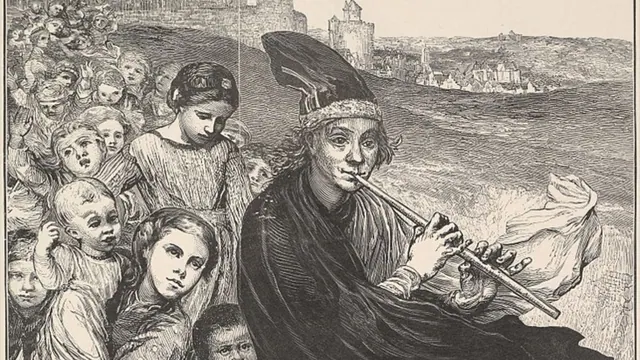
1284: The Date Attached to the Pied Piper

Hamelin's Pied Piper tradition associates June 26, 1284, with the departure of 130 children. Later retellings added or reshaped details, including the familiar story about rats and an unpaid piper. The local museum documents the tradition. That doesn't turn every element of the legend into an established eyewitness account.
1721: Smallpox Inoculation in Boston

Zabdiel Boylston began inoculations during Boston's smallpox epidemic on June 26, 1721, starting with his son and two people he enslaved. The practice already had a history outside Boston. Onesimus, an enslaved African man, had explained it to Cotton Mather. This was variolation, not the later vaccination developed using cowpox.
1917: American Troops Reach France
The first American Expeditionary Forces began landing at Saint-Nazaire on June 26, 1917, after the United States entered World War I that April. Arrival wasn't the same as immediate readiness for major combat. The forces still needed training, equipment and arrangements for a much larger deployment across the Atlantic.
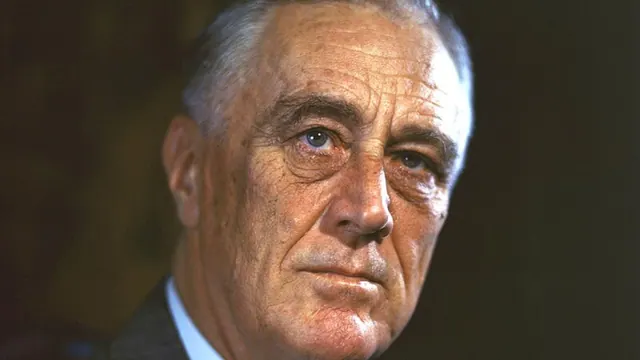
1934: The Federal Credit Union Act

President Franklin D. Roosevelt signed the Federal Credit Union Act on June 26, 1934. It established a federal chartering framework for cooperative credit unions during the Depression. State-chartered credit unions also existed; the law didn't invent every form of credit union. NCUA records the signing in its historical timeline.
1990: Mandela Addresses Congress

Nelson Mandela addressed a joint meeting of Congress on June 26, 1990, months after his release from prison. He urged continued pressure against apartheid, including maintaining sanctions. South Africa's transition was still underway. The address should be read in that setting, rather than as a speech delivered after he became president.
1993: A U.S. Strike on Baghdad

President Bill Clinton ordered a cruise-missile strike against Iraqi intelligence headquarters in response to a reported plot to assassinate former President George H. W. Bush. The strike was on June 26 by U.S. time and early June 27 in Baghdad. Official U.S. statements set out the administration's justification; that is distinct from independent agreement with it.
1997: Harry Potter's First Book Appears
Bloomsbury published Harry Potter and the Philosopher's Stone in Britain on June 26, 1997. The American edition later used the title Sorcerer's Stone. The first book's publication came before the films and the wider franchise, so those later successes shouldn't be folded into the date of its debut.
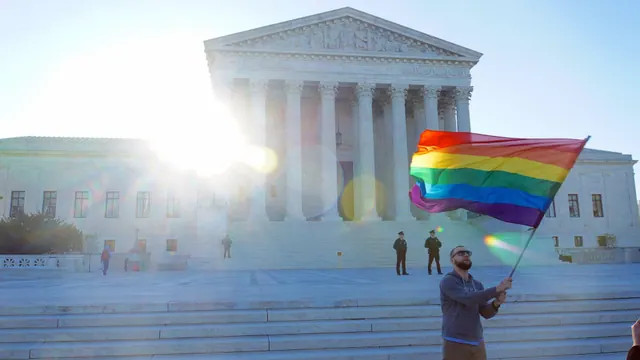
2015: Obergefell v. Hodges

On June 26, 2015, the U.S. Supreme Court ruled 5–4 that same-sex couples have a constitutional right to marry and that states must recognize their marriages. The case was Obergefell v. Hodges. The decision concerned civil marriage rights, rather than requiring religious institutions to change their own ceremonies.
June 2018: A Polio Outbreak, on a Different Date
Papua New Guinea's 2018 polio outbreak was confirmed on June 22, not June 26. WHO described a vaccine-derived virus circulating in an under-immunized community and a vaccination response. It wasn't a return of wild poliovirus after a new global eradication declaration. Keeping the date and the virus type straight changes the historical account.
2018: Trump v. Hawaii
The Supreme Court upheld the challenged entry restrictions in Trump v. Hawaii on June 26, 2018, by a 5–4 vote. Justice Sonia Sotomayor dissented, addressing the policy's context and discrimination concerns. This entry describes that decision, not the current rules for any person's travel or immigration case.